January 19th 2024
Research and experiments to understand the processes involved in anime cel production, leading to a better understanding of the specific anime look.
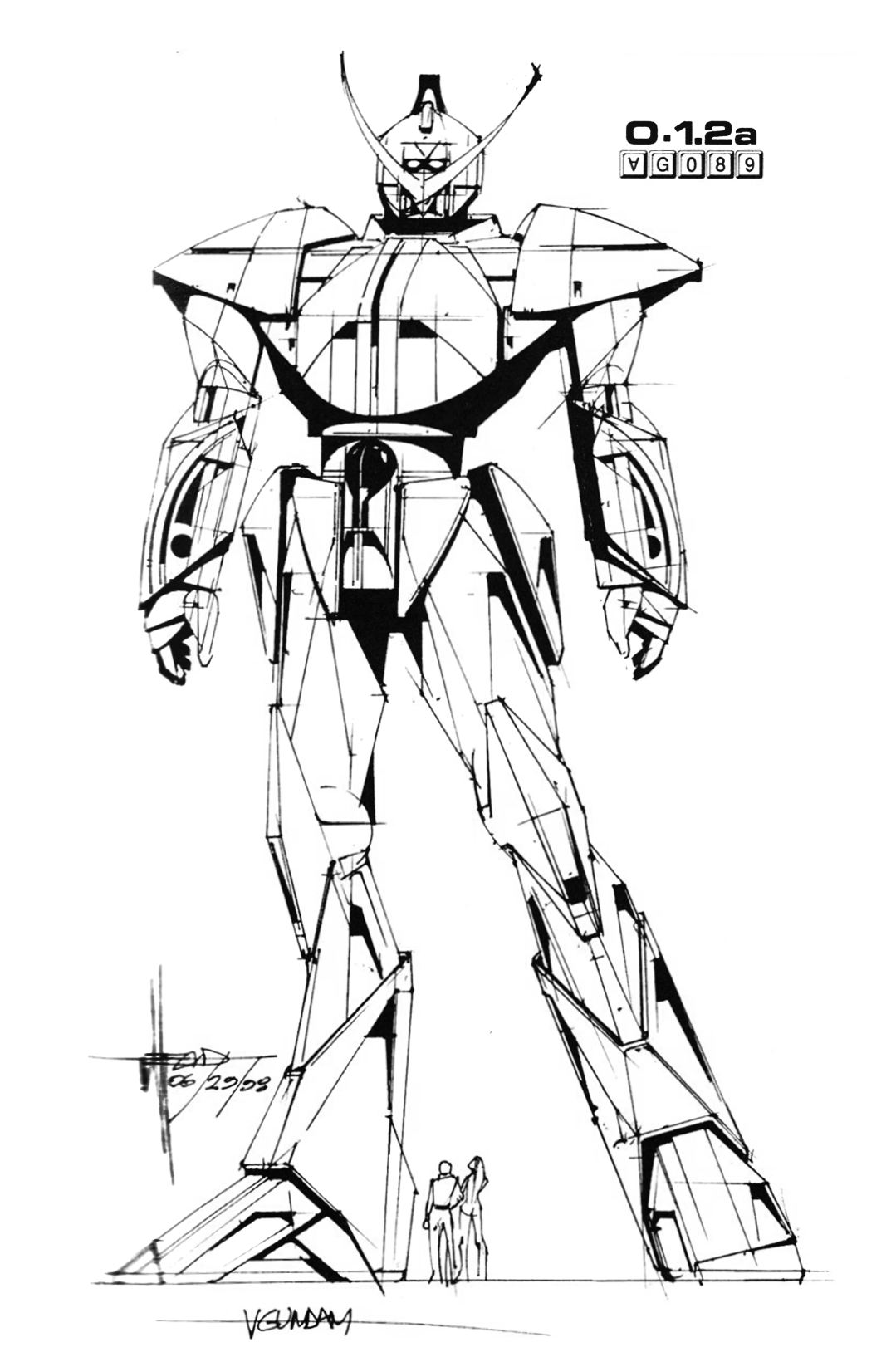
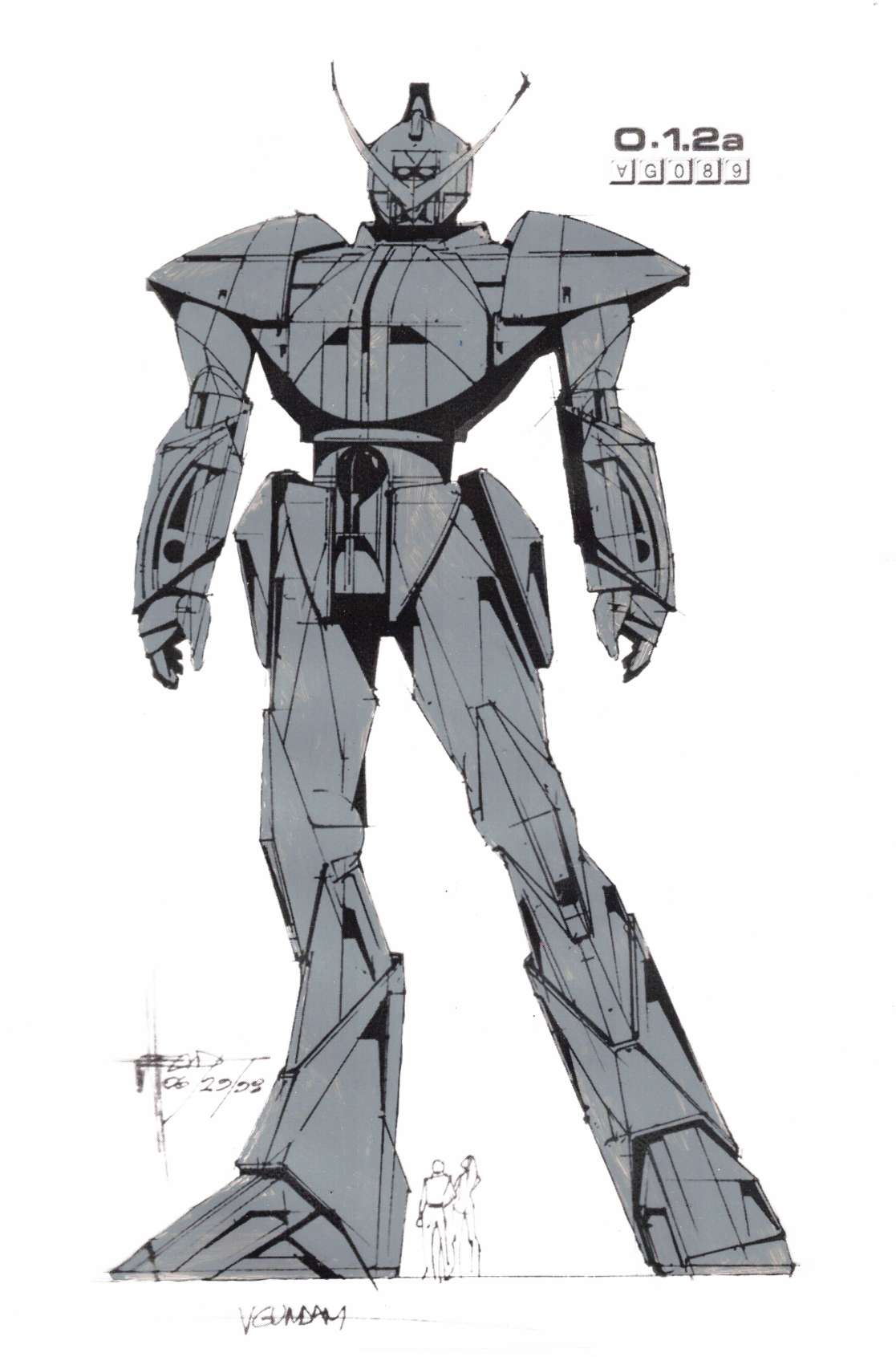
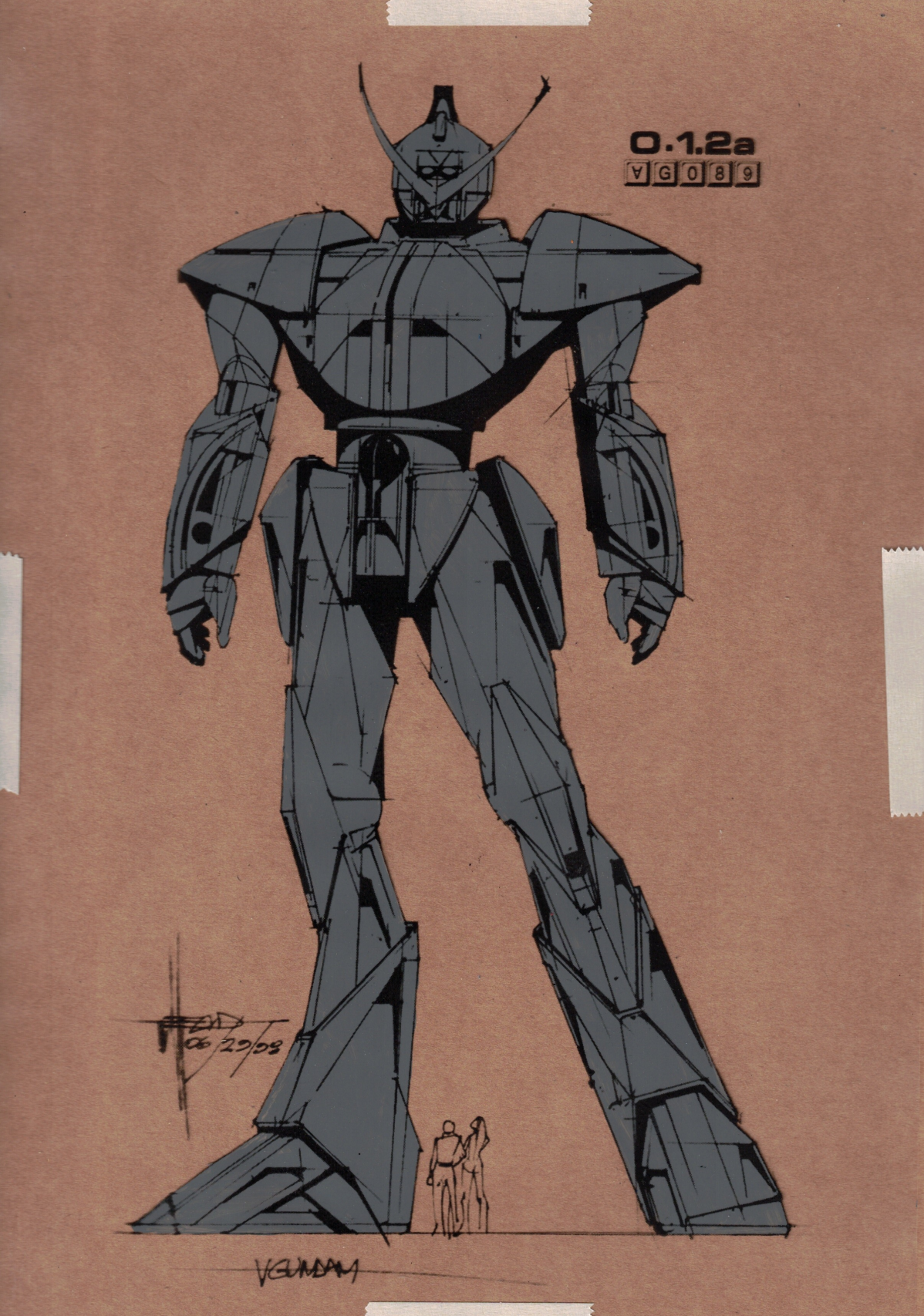
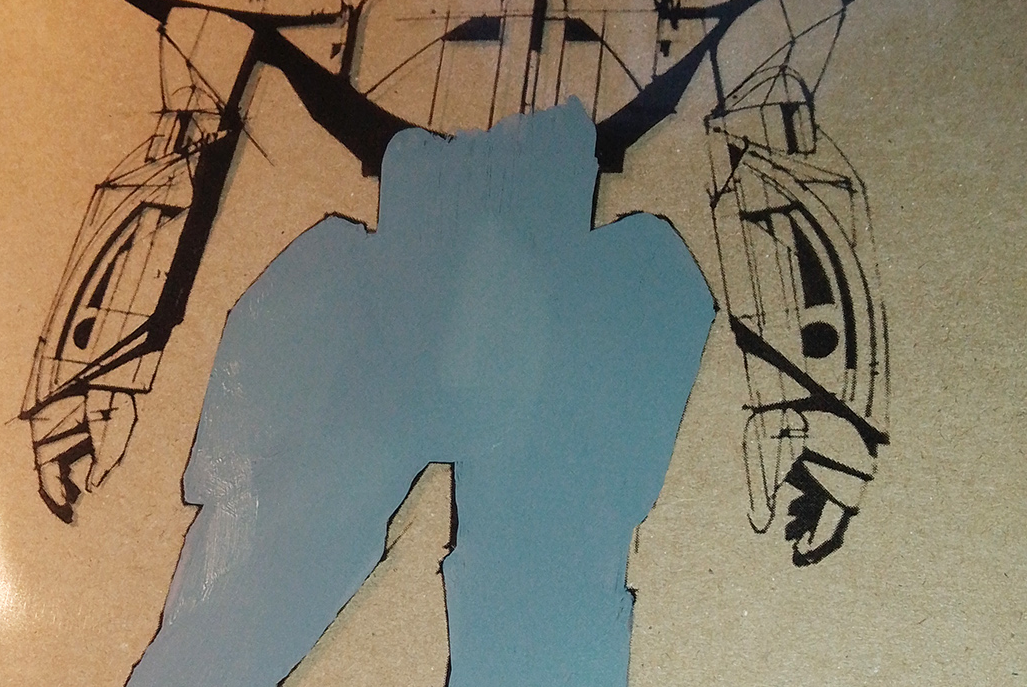
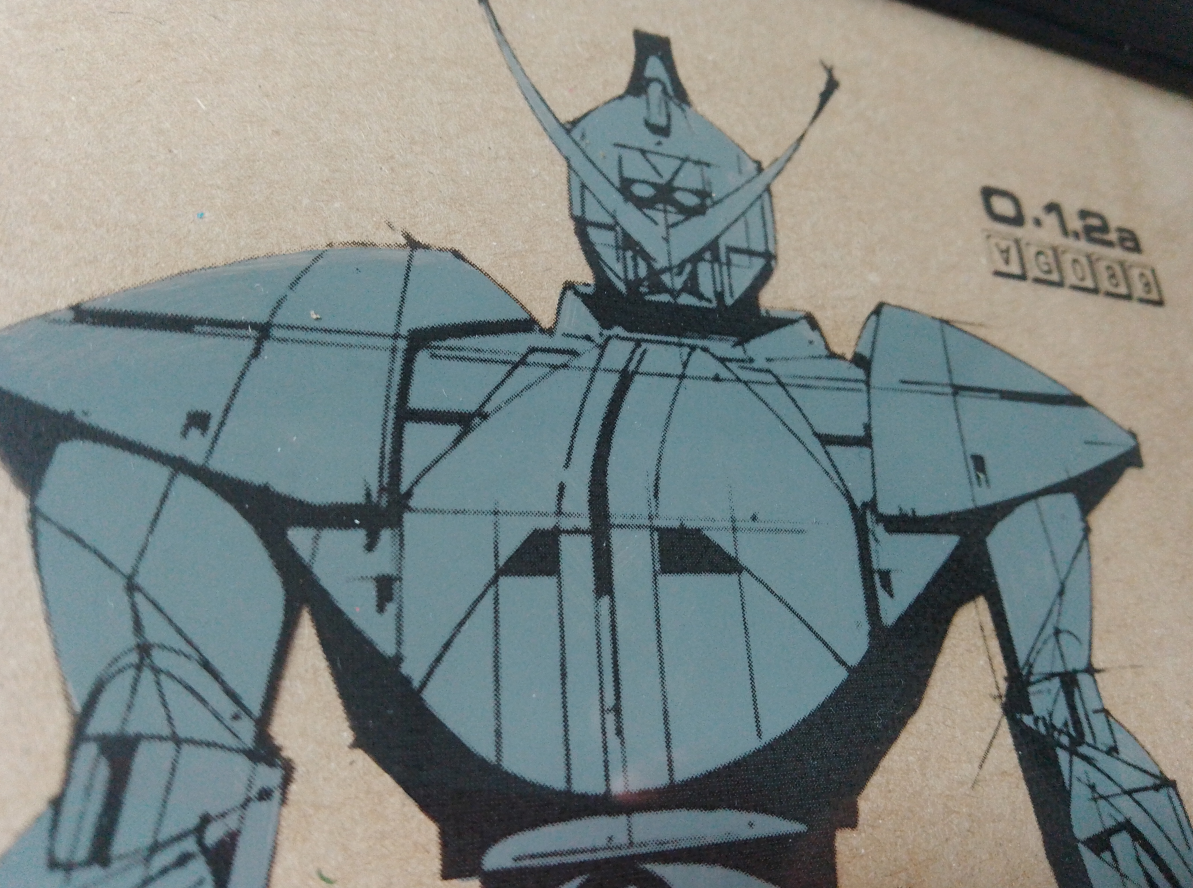
A technical drawing by Syd Mead for Turn-A Gundam was up-resed, cleaned up and printed on a transparent sheet using a laser toner printer.
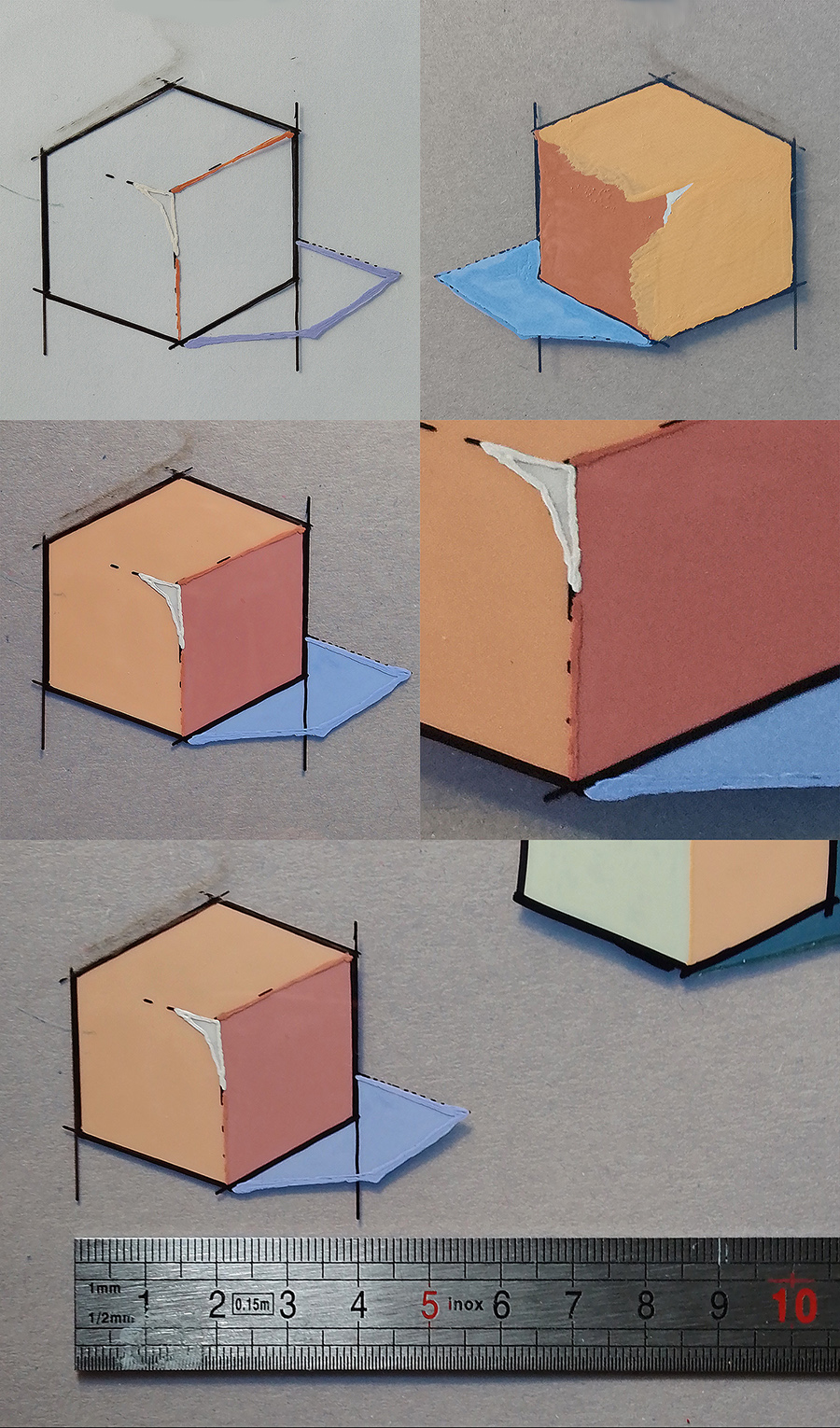
The color fill was painted at the back of the sheet, using Amsterdam Standard Series acrylic paint (neutral gray). Since this consisted of a single flat fill there was no shadow separation to take into account. Had a shadow separation been needed, it would have been drawn with a dip pen at the *front* of the transparent sheet, in the color of the shadow side.
The cel is then presented over a background of a neutral value - here a brown cardboard sheet.
Up close the result looks very "highres", as the paint fills have more visual clarity than a printed halftone separation.
Cels used in production are of course more complex than the above flat fill. Not only do they obviously have more than one color, but in the case of Japanese anime the have light and shade separation. This is true of nearly all modern anime TV shows, whereas American and European cartoons tend to use only flat lighting, without shadows.
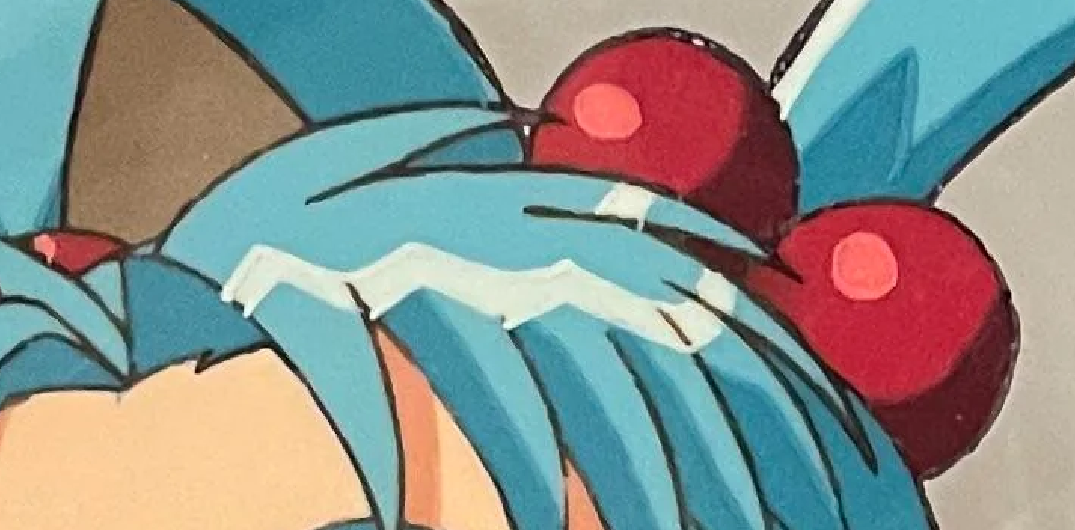
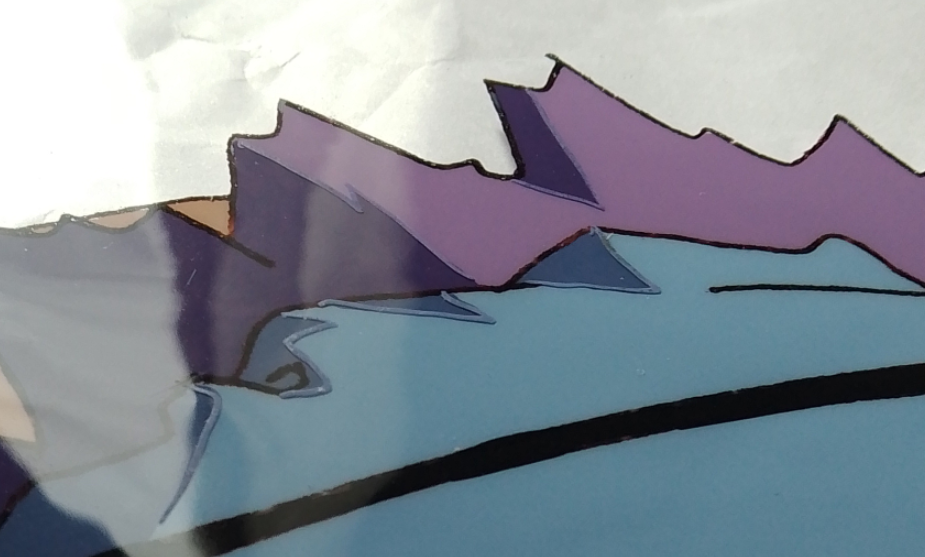
Studying examples from actual cels reveals that the shadowline (the edge separating light and shade) is painted on the front side of the sheet, with the color used for shadows. And since these painted lines are matte and applied on the front side, they appears just a little bit brighter than the shadow areas - hence a 3-step transition from light to dark. It is of course barely noticeable at TV resolution, but it clearly shows up in close-up photographs of cels taken by collectors. And when bright highlights or rim lights are needed they are also outlined this way.
Below, lineart from a Dragon Ball frame has been extracted from a Douga (clean pencil lineart) (top left) to act as a pseudo digital ink pass (top right).
Bottom left shows the original inked and painted cel (depending on the production, cels can be either manually inked, or xeroxed), with color fills painted on the back, and overlaid on top of a replica of a background plate. The complete image at the bottom-left isn't a screenshot from the show - it is a high res photograph taken by the owner of the cel.
Bottom-right shows a digital recreation of the painting process in Photoshop.
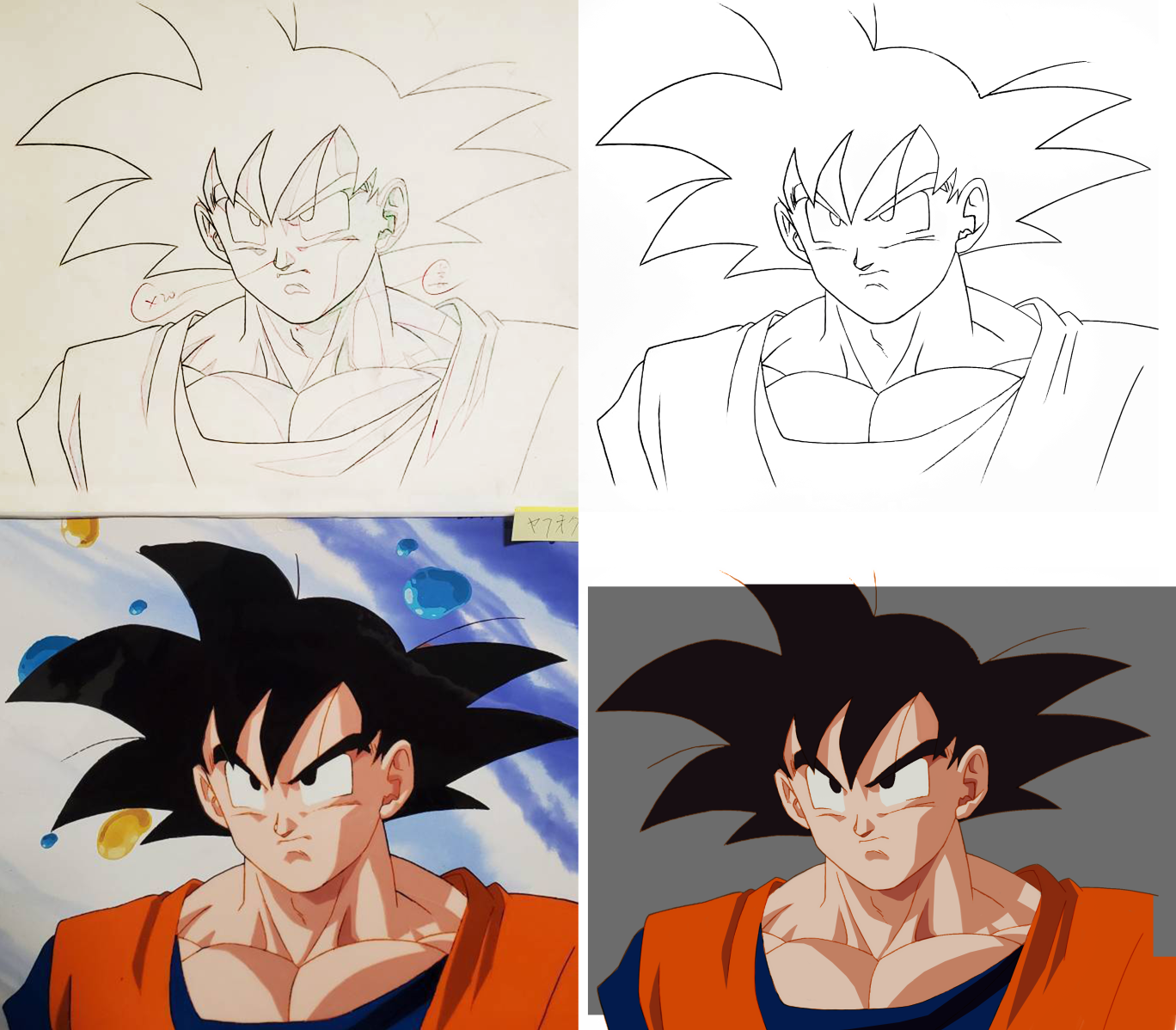
It is worth noting that the lines appearing in pink (on the face and chest) were *not* painted in color. These appear pink because of the fading of the black ink. It becoming pink is also likely because on some (most ?) shows the black lines were painted at the back of the cel - therefore likely to react with the paint fills. The actual frame from the TV show would have consistent black lines.
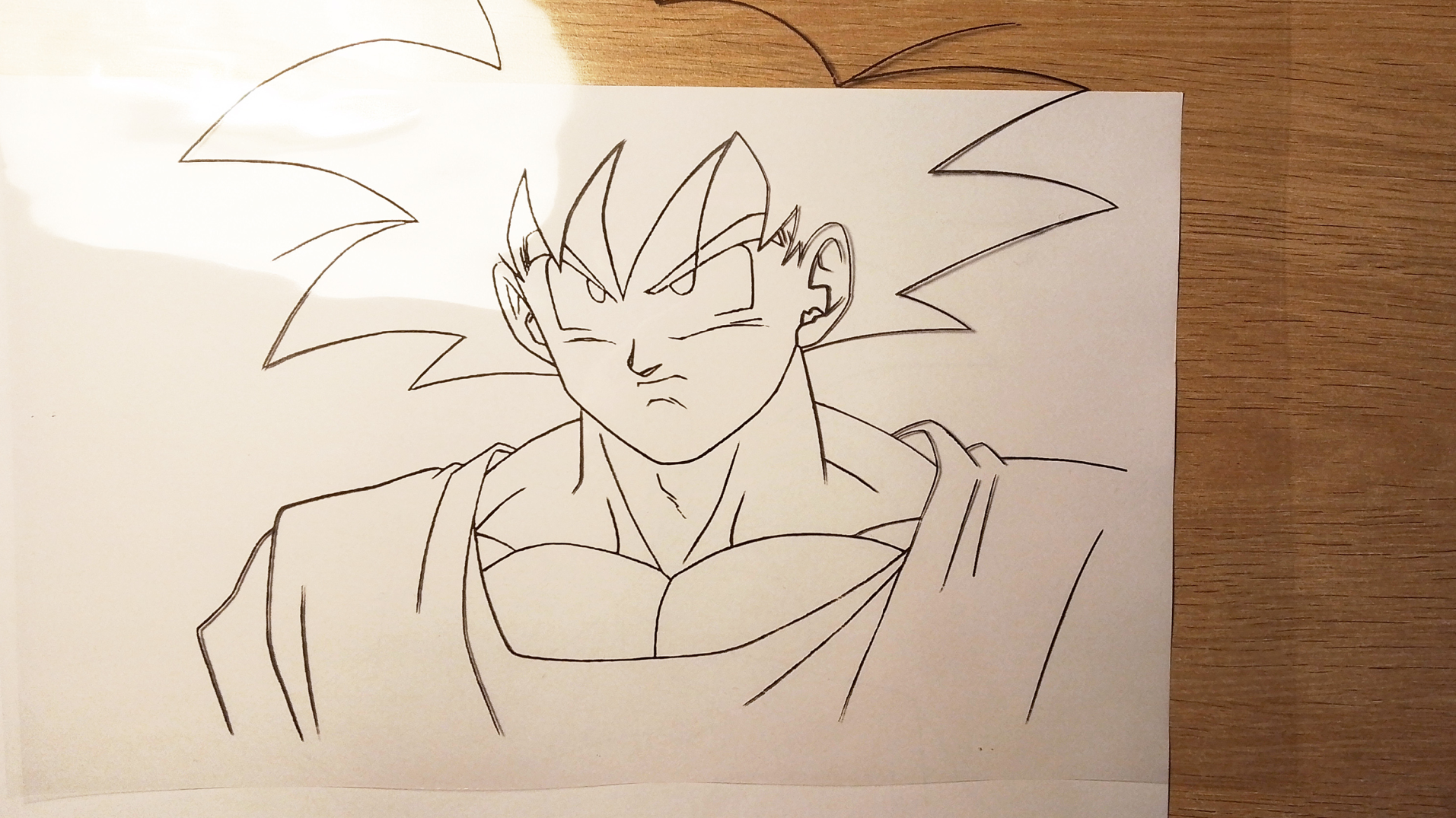
The digital inks were printed on a transparent sheet with a laser printer to recreate the inked cel.
Then, shadowlines following the breakdown from the Douga pencils were inked on the front of the transparent sheet, with a dip pen. And then color fills were applied at the back.
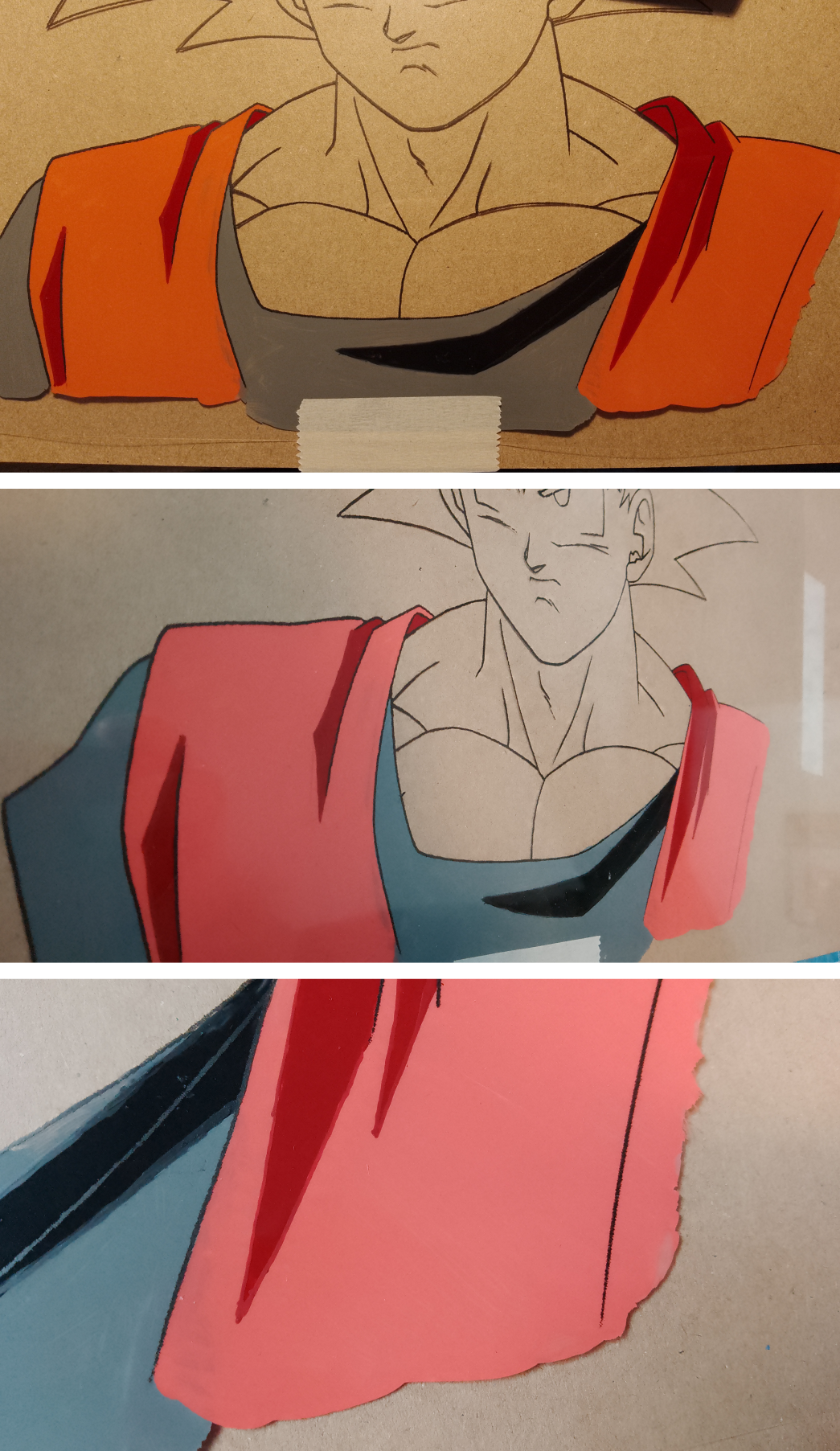
The 3-step transition from light to shade is clearly seen, here as a bright red line.
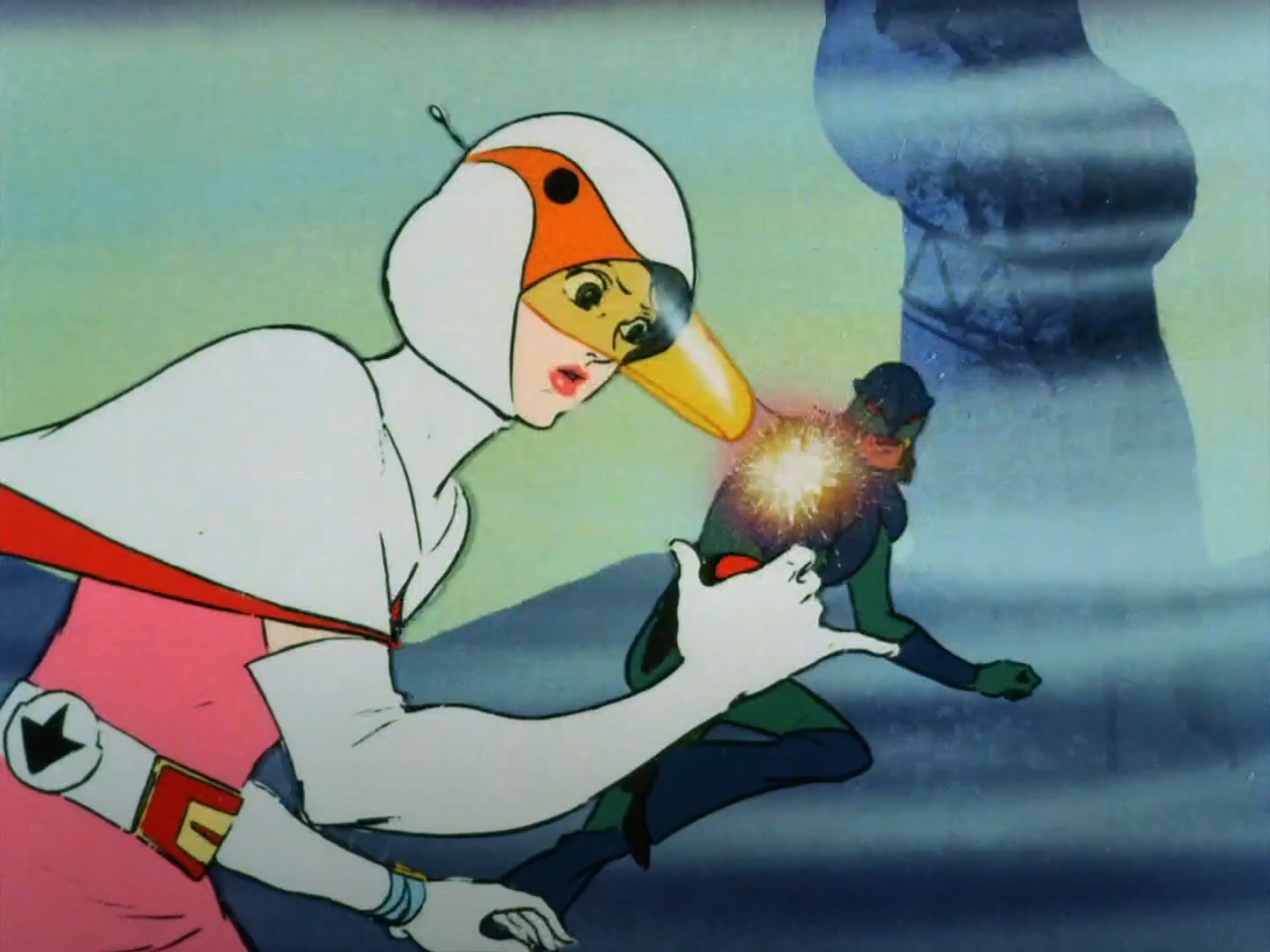
It is interesting to note that this effect is a mere byproduct of the color filling process ; yet it is desirable, and quite realistic. It is even sometimes recreated by digital illustrators. The faint shadow cast by the paint onto the background plate is another desirable analog artefact. It is actually quite noticeable in some older anime, like in the Gatchaman movie trailer :
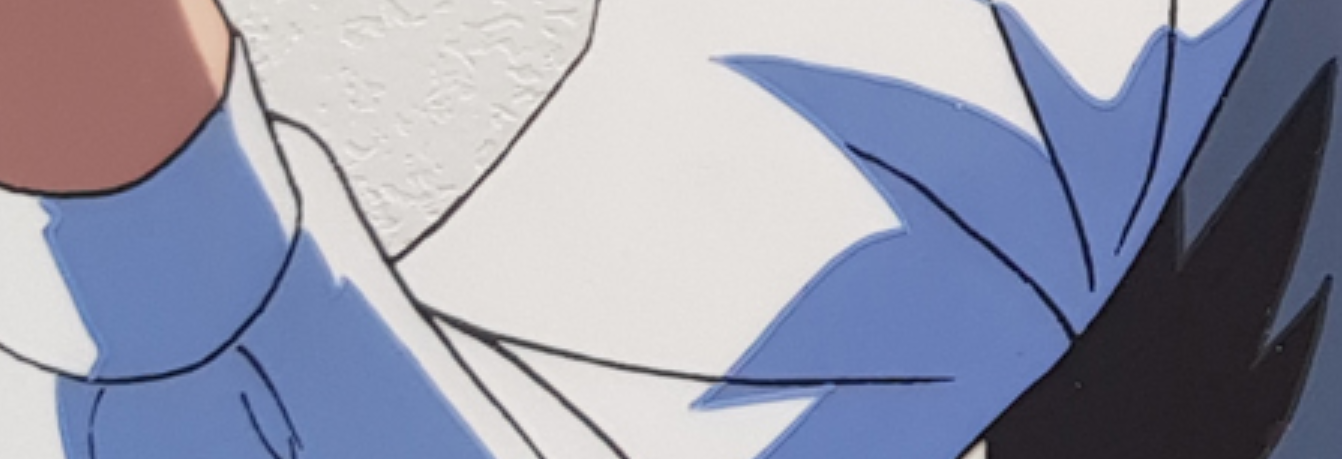
As mentioned above, inspecting a cel up close also reveals that at least on some productions, the black inked lines were drawn at the *back* of the cel (with the colored shadowlines still being drawn at the front). I don't think this makes much difference visually - but perhaps this helped when filling in the colors, as the inked lines probably act as a physical boundaries for the paint to not bleed over. This explains why the black lines tend to show through the brighter colors on the back side, as seen here on the off-white waist straps here. And as said this explains why inked lines covered with pink paint tend to turn pink as they fade with time.
Example on an original 90's cel (movie/show unknown) :
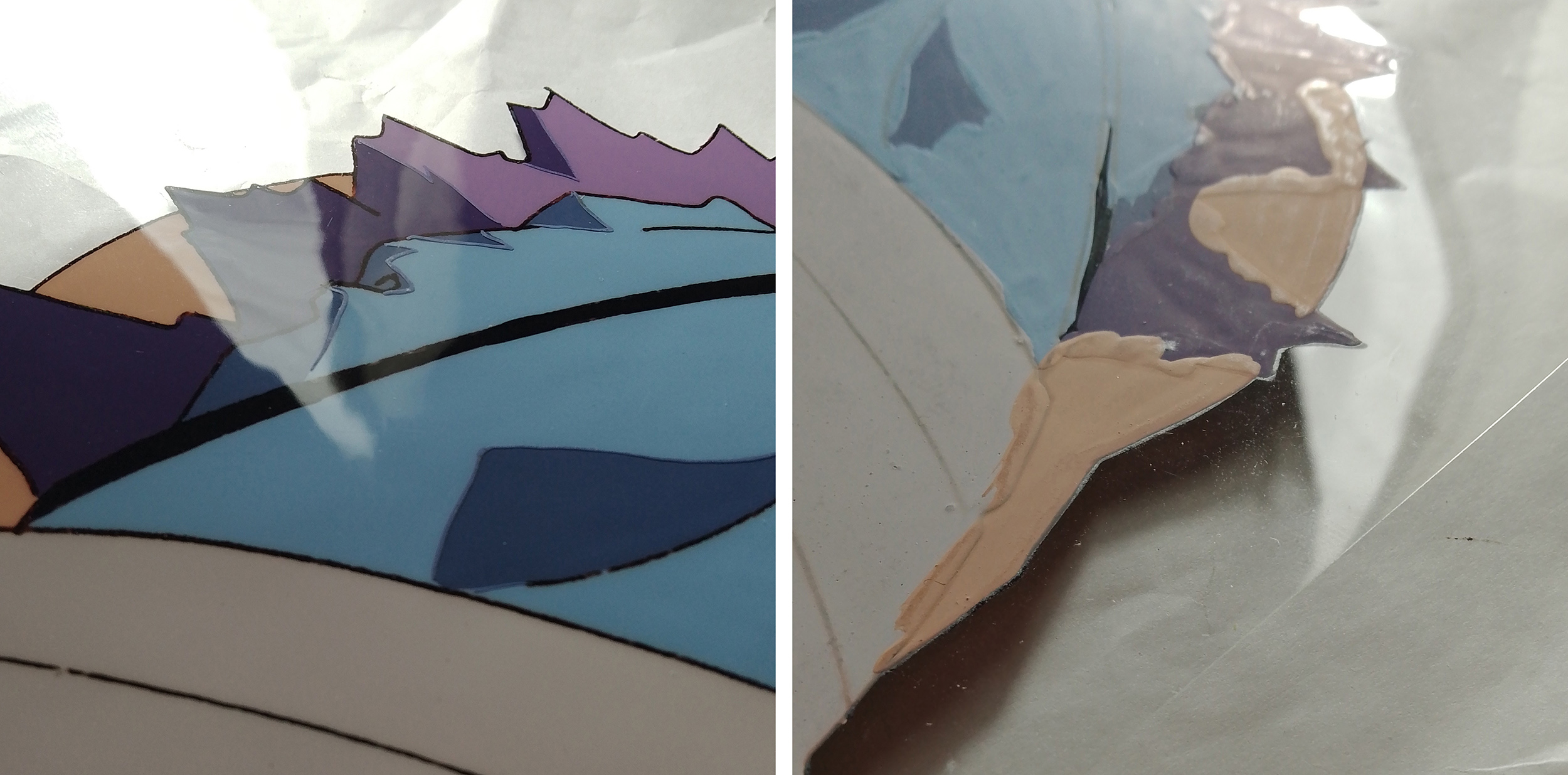
Reddit user u/deep-fried-canada showing the difference between an original cel with ink becoming tinted by the paint covering it, compared to the fresh black ink when originally shot :
https://www.reddit.com/r/SonicTheHedgehog/comments/je8bmg/what_kind_of_ink_was_used_for_the_lighter/
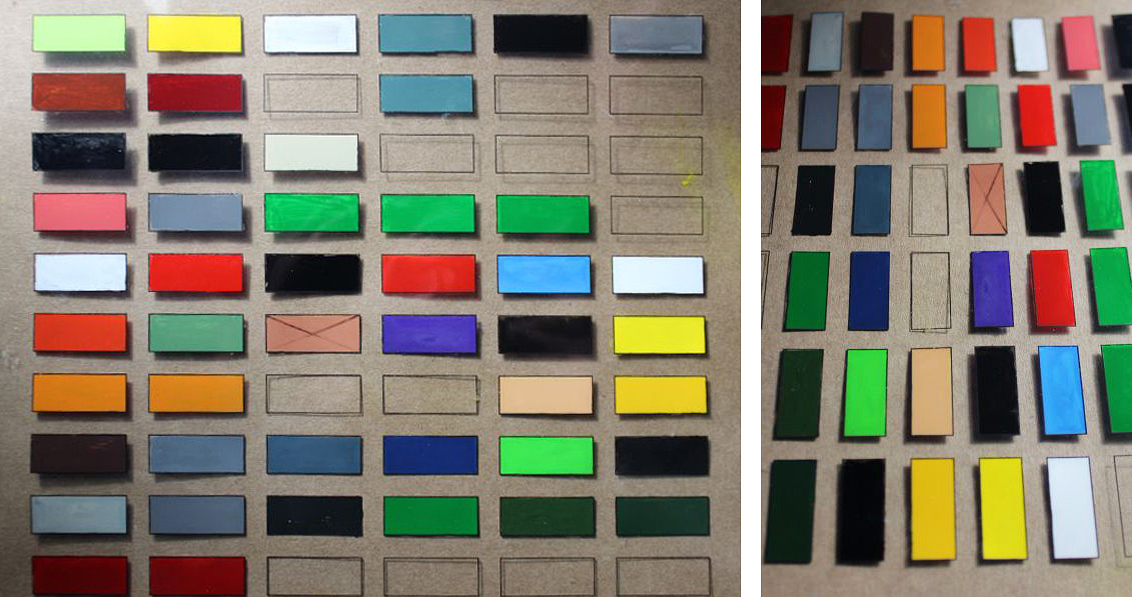
Test swatches done in various acrylic paints : heavy body from tubes, medium body from squeeze bottles, and thin hobby paint. It seems possible to modify the behavior of the paint in different ways, using gum arabic as well a glycerin, as seen on the 3 similar green swatches. Glycerin seems to lengthen drying time a lot.
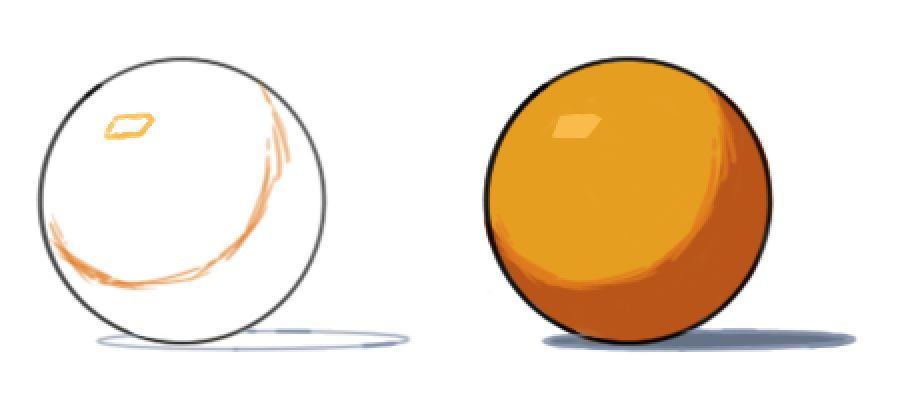
Black ink + colored shadowlines/highlight lines + color fills applied to digital rendering :
A test using liquid hobby paint. Mixing ratio for the shadow side of the flesh tone : 3flesh 1mahogany 1red.